
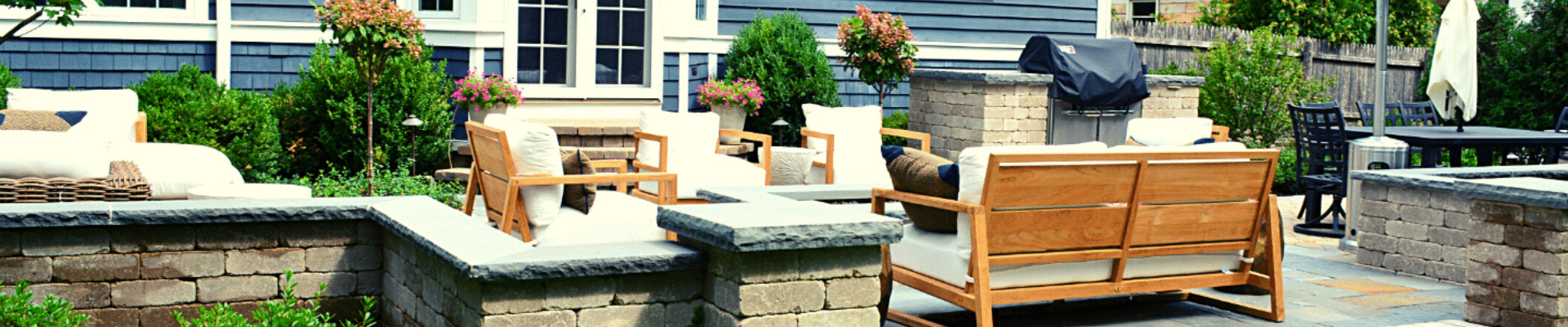
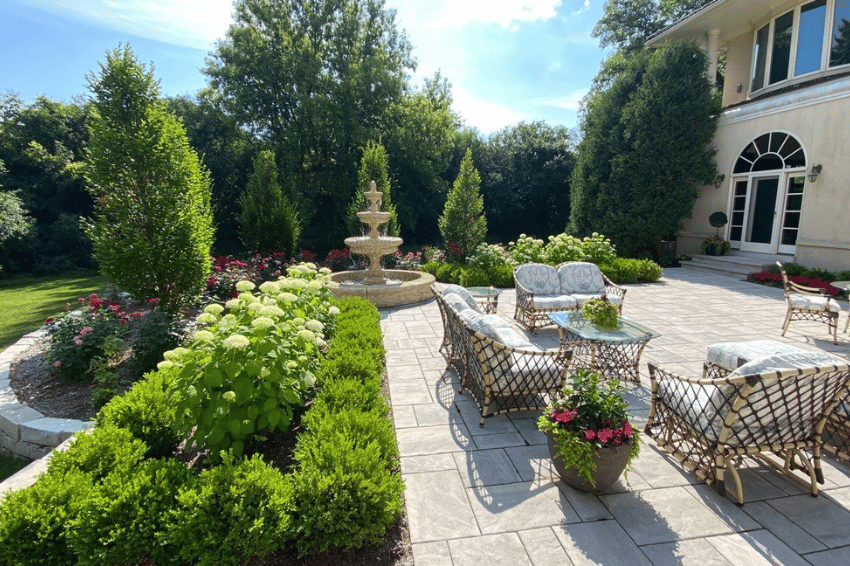
A paver patio in Chicago has to do more than look good in July. It has to survive February, March, and every little freeze-thaw tantrum Chicagoland throws at it in between.
That is why a long-lasting patio starts below the surface. The pavers are what you see, but the real durability comes from excavation depth, base preparation, compaction, edge restraint, slope, drainage, jointing sand, and ongoing maintenance. Skip those details, and even a beautiful patio can start shifting, sinking, or pooling water after a few seasons.
If you are planning a new patio, updating an outdoor living space, or comparing hardscape contractors in Chicago, here is what makes a paver patio durable in Chicagoland conditions.
Why Chicago Patios Need to Be Built Differently
Chicago-area patios deal with constant seasonal movement. Water gets into the soil and base materials, freezes, expands, melts, and shifts again. Add clay-heavy soil, spring rain, summer storms, and winter ice, and the patio has to be built like a system, not just a surface.
Most patio failures are not caused by the pavers themselves. They usually happen because water was not managed correctly or the base was not prepared well enough for local conditions.
Common signs of a weak patio build include:
- Pavers rocking or moving underfoot
- Low spots where water collects
- Edges spreading outward
- Joint sand washing out
- Uneven steps or transitions
- Weeds growing through unstable joints
A well-planned hardscape installation helps prevent those problems by addressing the structure before the first paver is placed.
Excavation Depth Sets the Foundation
Excavation is the first major step in building a durable paver patio. The right depth depends on the patio’s intended use, soil conditions, drainage needs, and whether the space will support only foot traffic or heavier features like seating walls, grills, kitchens, or fire elements.
In Chicagoland, shallow excavation is one of the quickest ways to create long-term problems. If the base is not deep enough, it cannot distribute load properly or resist freeze-thaw movement. That can lead to settling, heaving, and uneven surfaces.
A professional patio design in Chicago should consider:
- Existing soil conditions
- Final patio elevation
- Drainage path and slope
- Access from doors, walkways, and lawn areas
- Nearby structures, trees, and utilities
This is where a thorough site evaluation matters. A patio should be designed around the actual property, not a generic template pulled out of the contractor goblin drawer.
Base Build Is What Keeps the Patio Stable
Once the area is excavated, the base build becomes the main structural layer of the patio. This is the part homeowners rarely see, but it is the part that determines how the patio performs after heavy rain, snowmelt, and winter temperature swings.
A durable patio base typically includes properly selected aggregate installed in layers. Those layers are built and compacted gradually so the surface remains stable over time. Dumping base material in one thick layer will lead to structural issues that will require major repairs.
The base has to support the patio, allow water to move properly, and create a consistent foundation for the bedding layer and pavers above it.
Compaction Is Not Optional
Compaction is one of the most important parts of paver patio construction. Without it, the base can settle unevenly, especially after heavy rain or repeated freeze-thaw cycles.
Proper compaction helps:
- Reduce shifting and sinking
- Create a stable surface for the bedding layer
- Improve load distribution
- Limit future low spots
- Protect the finished patio from early failure
If you are talking with hardscape contractors in Chicago, ask how they handle base preparation and compaction. A good answer should be specific. If the answer is vague, your patio may be about to enter its villain origin story.
Edge Restraint Keeps the Patio from Spreading
Paver patios need strong edge restraint to keep the field pavers locked in place. Without it, the outer edges can begin to drift, which causes joints to widen and the surface to lose its clean layout.
Edge restraint is especially important for patios with curves, borders, steps, or transitions into lawn and planting beds. It keeps the design crisp and helps the patio maintain its shape season after season.
For patios connected to larger outdoor living spaces, edge planning also affects how the patio connects to walkways, decks, gardens, fire pits, and seating areas.
Slope and Drainage Make or Break the Patio
Water is the real enemy of a patio in Chicago. A patio that traps water can develop pooling, ice hazards, base washout, and long-term settling. That is why slope and drainage should be planned before installation begins.
A durable patio should move water away from the home and away from areas where it can damage the base. Depending on the property, drainage planning may include:
- Proper surface slope
- Redirected downspouts
- Drainage stone and base design
- Channel drains in problem areas
- Permeable paver options where appropriate
- Coordination with lawn and bed grading
This is one reason design and build should work together. A patio that looks great on paper still needs to function in real weather, on real soil, with real water movement.
Polymeric Sand Helps Stabilize the Joints
Polymeric sand is used between pavers to help lock joints and reduce washout, weeds, and insect activity. When installed correctly, it helps the patio feel more finished and stable.
However, polymeric sand is not magic dust. It works best when the patio has already been built correctly. If the base is weak, drainage is poor, or the pavers are shifting, polymeric sand cannot save the whole system.
For best results, the surface should be clean, the joints should be filled properly, and the sand should be activated according to the product requirements. Poor installation can leave haze on the pavers or joints that fail too soon.
Maintenance Helps Protect the Patio Long Term
Even a well-built paver patio needs routine care. Maintenance keeps the patio cleaner, safer, and more stable over time.
Homeowners should plan to:
- Keep the patio clear of heavy debris and organic buildup
- Inspect joints after winter and heavy storms
- Refill joint sand when needed
- Watch for early signs of settling or water pooling
- Clean stains before they set deeply
- Avoid harsh de-icing products that may damage materials
If the patio is part of a larger landscape, ongoing landscape maintenance also matters. Beds, turf, downspouts, and nearby grading can all affect how water moves around the patio.
Typical Timeline for a Paver Patio Project in Chicago
Every property is different, but most paver patio projects follow a similar process. The timeline depends on design complexity, material availability, permitting when relevant, weather, and the contractor’s schedule.
A typical process may include:
- Consultation and site review: Goals, measurements, access, drainage, and design direction are discussed.
- Patio design: Layout, shape, materials, borders, steps, and connected features are planned.
- Proposal and material selection: Scope, pricing, materials, and schedule are finalized.
- Scheduling: Installation is placed on the calendar, with weather and site readiness considered.
- Installation: Excavation, base build, compaction, edge restraint, paver installation, jointing, and cleanup are completed.
- Final walkthrough: Details are reviewed and any punch list items are addressed.
Mid-summer is a busy time because homeowners are actively using their yards and thinking about how much better the space could be. If you want a patio completed within the main outdoor living season, it helps to start planning early.
What Homeowners Should Prepare Before Installation
Before your patio installation begins, a little preparation can keep the project moving smoothly.
Helpful steps include:
- Confirming access for crews and equipment
- Moving furniture, planters, grills, and décor out of the work area
- Marking irrigation heads or known underground features
- Discussing pet access and yard use during construction
- Reviewing material selections before work begins
- Clarifying drainage concerns you have noticed during storms
A professional design-build process should help you understand what needs to happen before, during, and after installation.
Build a Patio That Looks Good Now and Holds Up Later
A paver patio in Chicago should be built for more than one beautiful summer. It should be designed for freeze-thaw cycles, drainage, soil movement, and real everyday use.
When excavation depth, base build, compaction, edge restraint, slope, polymeric sand, and maintenance all work together, the result is a patio that feels solid, drains correctly, and stays attractive through Chicagoland’s seasonal mood swings.
If you are planning a new patio or comparing hardscape contractors in Chicago, Martin John Company can help you design and build a space that fits your home, your yard, and the way you want to use it.
Contact Martin John Company to schedule a consultation for your paver patio project.