
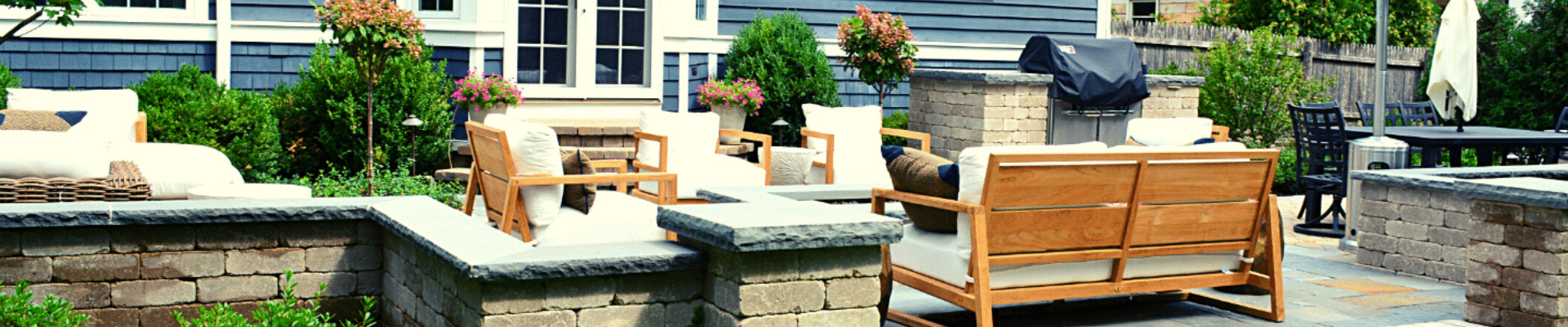
Hedges can make a property feel polished, private, and intentionally maintained. They frame entries, soften fences, define outdoor rooms, and give North Shore landscapes that clean, finished look. But in Illinois summers, hedge trimming is not just about making shrubs look tidy. It is about timing the work correctly, using the right tools, and avoiding cuts that stress the plant during heat, drought, and active growth.
The best hedge trimming tips are simple: trim at the right time, cut with purpose, avoid aggressive pruning during summer stress, and shape each species according to how it naturally grows. That sounds calm and civilized. Then July shows up wearing a humidity cape, and suddenly every shrub is either exploding with growth or sulking in the heat. Lovely little plant drama.
If you are planning seasonal landscape maintenance for a home, HOA, or commercial property in Illinois, here is how to keep hedges healthy, clean, and consistent through the summer.
Why Hedge Trimming Matters in Summer
Summer trimming helps control growth, maintain shape, and keep plantings from crowding walkways, windows, driveways, and outdoor living areas. It also supports airflow through the plant, which can reduce certain disease pressures when shrubs get too dense.
However, trimming at the wrong time or removing too much foliage during high heat can stress shrubs. Leaves are how plants produce energy. When too much green growth is removed during hot, dry weather, the plant may struggle to recover.
Good hedge trimming balances appearance with plant health. Clean lines are great. Forcing shrubs into a tiny geometric panic cube is not.
The Best Timing for Hedge Trimming in Illinois
Timing depends on the plant species and the goal of the trim. In general, Illinois hedges often benefit from light shaping after the main spring flush of growth. For many shrubs, this happens in late spring to early summer.
Mid-summer trimming should be lighter and more selective, especially during hot or dry stretches. Heavy pruning is better saved for cooler periods or dormant-season work when the plant is not actively battling summer stress.
A practical timing guide:
- Late spring to early summer: Good window for shaping many hedges after active spring growth.
- Mid-summer: Best for light touch-ups, line maintenance, and removing stray growth.
- Late summer: Avoid hard pruning that may encourage tender new growth before fall.
- Dormant season: Better for structural pruning and certain renewal work, depending on species.
For ongoing landscaping services, the best schedule is usually based on plant type, location, and how formal or natural the property’s style is meant to be.
What Not to Cut During Heat Stress
One of the most important summer hedge trimming tips is knowing when to leave the plant alone. If shrubs are already stressed, trimming can make things worse.
Avoid heavy trimming when:
- Temperatures are extremely high
- The plant is drought-stressed or wilting
- Leaves are browning from winter burn, salt, or heat
- The shrub was recently transplanted
- The soil is very dry and irrigation is inconsistent
- The plant is recovering from pest or disease damage
Lightly removing a few wild shoots is usually fine. Cutting deeply into the shrub during stress is where things get dicey. The plant needs foliage to recover, and summer is not always forgiving.
Use the Right Tools for Clean Cuts
Clean cuts help shrubs heal faster and look better after trimming. Dull blades tear foliage and stems, leaving ragged edges that brown quickly.
Common hedge trimming tools include:
- Hand pruners: Best for selective cuts, small branches, and detail work.
- Loppers: Useful for thicker stems that are too large for hand pruners.
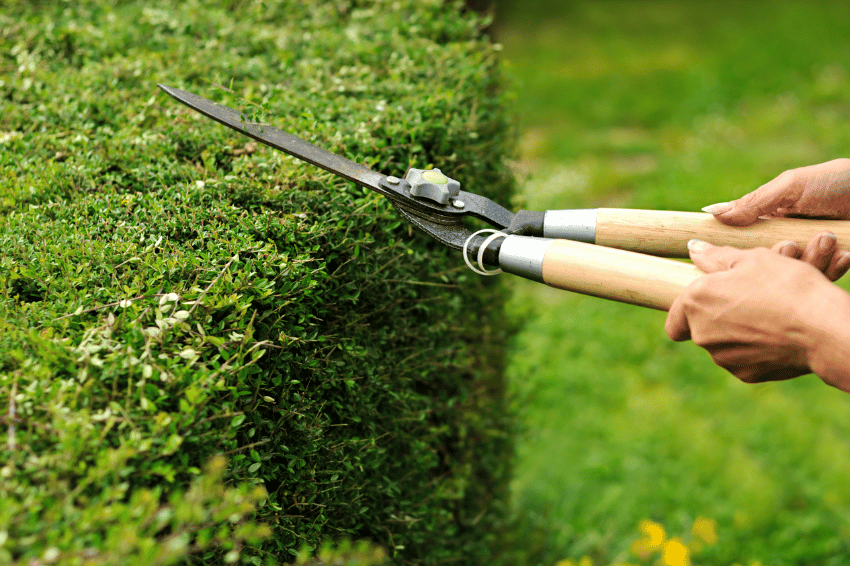
- Manual hedge shears: Good for controlled shaping on smaller formal hedges.
- Powered hedge trimmers: Efficient for larger hedges and long straight lines.
Before trimming, make sure tools are sharp and clean. If you are moving between plants, especially if one looks diseased, cleaning blades helps reduce the chance of spreading problems.
Shape Hedges Wider at the Bottom
A healthy hedge should usually be slightly wider at the bottom and narrower at the top. This shape allows sunlight to reach the lower branches, helping prevent thin, bare bases.
If the top is wider than the bottom, it shades the lower growth. Over time, the hedge can become woody and sparse near the ground. That is how you end up with the botanical version of a bad haircut: fluffy top, sad bottom, everyone uncomfortable.
For clean shaping:
- Start by removing obvious stray branches
- Trim gradually instead of taking off too much at once
- Step back often to check the overall line
- Keep the base slightly wider than the top
- Avoid cutting deeply into bare wood unless the species can recover from it
Match the Trim to the Shrub Species
Different hedges respond differently to trimming. A technique that works for one plant can damage another.
Boxwood
Boxwood is popular for formal lines and foundation plantings, but it can be sensitive to stress. Light, regular trimming is better than aggressive summer cutting. Avoid shearing too tightly in hot weather, and allow some airflow through the plant.
Arborvitae
Arborvitae is often used for privacy screening. It can be lightly shaped, but avoid cutting back into old bare wood. Arborvitae usually will not regrow well from deep cuts into leafless interior branches.
Yew
Yews are more forgiving than many evergreens and can often tolerate pruning better than arborvitae. Still, summer shaping should be measured, especially during dry periods.
Privet
Privet grows quickly and often needs more frequent shaping to maintain clean lines. It can handle trimming well, but consistent maintenance is better than letting it overgrow and then cutting it back severely.
Viburnum and Flowering Shrubs
Flowering shrubs need more thoughtful timing. Trimming at the wrong time can remove flower buds and reduce blooms. For spring-flowering shrubs, pruning is often best after flowering rather than randomly during summer.
Common North Shore Hedge Species and Summer Guidance
In Libertyville, Lake Forest, and surrounding North Shore areas, hedges are often used for privacy, foundation structure, driveway borders, and formal garden edges. Common species include boxwood, arborvitae, yew, privet, hydrangea, viburnum, and mixed shrub borders.
For North Shore properties, summer hedge care should also consider:
- Lake-effect weather: Wind and temperature shifts can affect exposed plantings.
- Salt exposure: Hedges near roads, driveways, and sidewalks may already be stressed from winter salt.
- Shade from mature trees: Shaded hedges may grow thinner and need lighter shaping.
- Formal property styles: Some homes require cleaner lines and more frequent touch-ups.
- Deer pressure: Certain shrubs may need protection or replacement with less tempting options.
A strong landscaping plan chooses hedge species based on the property’s light, soil, exposure, and maintenance expectations.
Do Not Shear Everything Into the Same Shape
Not every shrub wants to be a box. Some hedges look best with a formal clipped shape. Others perform better with selective pruning that keeps their natural form.
Formal hedges usually need more frequent trimming to preserve clean lines. Natural hedges may only need selective cuts to remove crossing branches, control size, and maintain healthy structure.
Before trimming, ask one simple question: is this plant supposed to look architectural or natural? The answer should guide the cut.
Watch for Signs Your Hedge Needs More Than Trimming
Sometimes trimming is not the fix. If a hedge looks uneven, thin, or unhealthy, the real issue may be water, light, soil, pests, disease, or winter damage.
Look for these warning signs:
- Brown patches that do not recover
- Thin lower growth
- Dead interior branches
- Leaf spotting or discoloration
- Sections that wilt even after watering
- Plants leaning, splitting, or separating
If you see those issues, trimming may improve the shape temporarily, but it will not solve the underlying problem. A professional maintenance visit can help identify whether the hedge needs pruning, plant health care, soil improvement, or replacement.
Simple Summer Hedge Trimming Checklist
Use this checklist before trimming hedges in Illinois summer conditions:
- Check the weather and avoid trimming during extreme heat
- Confirm the shrub species before making major cuts
- Inspect for drought stress, pests, disease, or winter damage
- Use sharp, clean tools
- Trim lightly and gradually
- Keep the hedge slightly wider at the bottom
- Step back often to check the line
- Remove dead or damaged growth with selective cuts
- Water appropriately after trimming if conditions are dry
- Schedule professional help for large, tall, or declining hedges
When to Call a Professional
Professional hedge trimming is worth considering when hedges are tall, formal, overgrown, or part of a larger property maintenance plan. It is also helpful when you are not sure how a specific shrub will respond to pruning.
Call a pro if:
- The hedge is too tall to trim safely from the ground
- You need consistent lines across a large property
- The shrubs are overgrown and may need staged renovation
- You are dealing with browning, thinning, or dieback
- The hedge borders a walkway, driveway, or commercial entrance
For larger residential, HOA, and commercial properties, professional commercial landscaping maintenance can help keep hedges, lawns, beds, and entries consistent throughout the season.
Healthy Hedges Come From Good Timing and Better Technique
Hedge trimming in Illinois summers should never be a random haircut. It should support healthy growth, clean lines, and the long-term structure of the plant.
With the right timing, sharp tools, species-specific pruning, and a little restraint during heat stress, hedges can stay polished without sacrificing plant health. That is the sweet spot: clean enough to look intentional, gentle enough that the shrubs do not file a formal complaint.
If your property needs seasonal hedge trimming, pruning, or ongoing landscape maintenance services, Martin John Company can help keep your landscape healthy and sharp through the summer.
Contact Martin John Company to schedule a maintenance consultation for your Illinois property.