
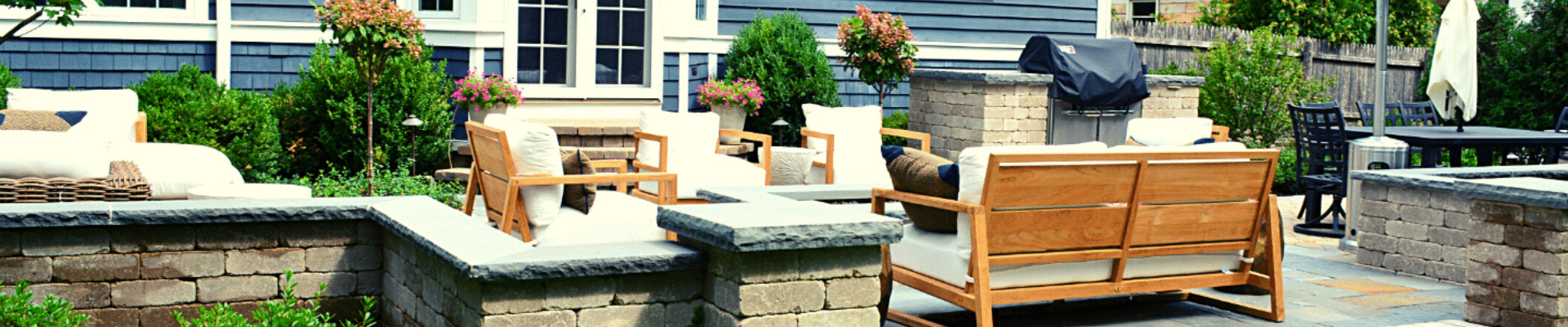
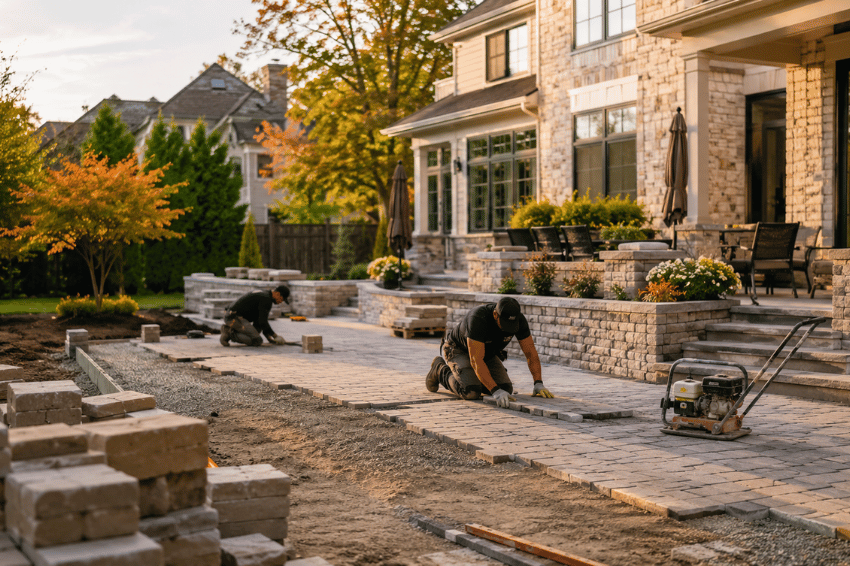
Late summer is one of the smartest times to plan hardscape installation in Chicagoland. The weather is usually more predictable than spring, homeowners are actively using their yards, and there is still enough time to complete patios, walkways, retaining walls, and outdoor living upgrades before the uncertainty of fall weather.
But timing matters. A successful hardscape project is not only about choosing pavers or stone. It also depends on scheduling, material lead times, site access, permitting when relevant, and the order of work. Wait too long, and a project that could have been finished before fall may get squeezed by cooler temperatures, early rain, shorter days, and contractor availability.
If you are considering hardscape installation for your Chicago-area home or commercial property, here is what to schedule before fall and why late summer can be such a strong build window.
Why Late Summer Is a Strong Window for Hardscape Installs
Spring gets a lot of attention for outdoor projects, but late summer has real advantages. By this point in the season, the ground is usually more workable, the rush of early spring cleanup has passed, and homeowners have a clearer sense of how they actually use their outdoor spaces.
Maybe the patio is too small. Maybe the walkway gets muddy after every storm. Maybe the backyard seating area technically exists, but in the same way a folding chair in the garage technically counts as furniture. Late summer reveals what is working and what needs to be improved.
Late summer can be ideal for:
- Patio installation and expansions
- Walkways and entry paths
- Retaining walls and seat walls
- Outdoor living space foundations
- Fire pit areas and gathering spaces
- Drainage improvements tied to hardscaping
- Commercial walkway and curb appeal upgrades
It also gives you a chance to finish the project before fall entertaining, before winter freeze-thaw cycles, and before next spring’s schedule gets crowded again.
Start With the Site Survey
Before materials are ordered or dates are locked in, a site survey helps determine what the project really needs. This step can include measurements, grade review, drainage observations, access points, existing hardscape conditions, and any constraints that may affect construction.
A site survey is especially important in Chicagoland because soil, slope, water movement, and freeze-thaw cycles all influence how hardscapes should be built.
During the site review, your contractor should look at:
- Existing grade and drainage patterns
- Low areas where water collects
- Access for equipment and materials
- Nearby trees, roots, utilities, and structures
- Transitions between doors, steps, lawns, and beds
- Existing patios, walkways, or walls that need removal
A strong design-build process uses this information to prevent surprises during construction. The goal is to solve problems before they become very expensive little gremlins with shovels.
Material Lead Times Can Affect Your Schedule
Hardscape materials are not always available instantly, especially during peak outdoor living season. Pavers, natural stone, retaining wall block, coping, lighting components, drainage materials, and specialty finishes can all have lead times.
If your project uses a common material, scheduling may be simpler. If your design includes specialty pavers, custom stone, specific colors, or a larger quantity of material, ordering early becomes more important.
Material decisions to finalize before fall include:
- Paver or stone style
- Color blend and finish
- Border or accent pattern
- Wall block or coping selections
- Step materials
- Drainage components
- Lighting fixtures, if included
The earlier these choices are made, the easier it is to keep the installation timeline intact.
Permitting May Be Needed for Some Projects
Not every hardscape project requires a permit, but some do. Requirements vary by municipality and scope, so it is important to check early rather than assume.
Permitting may be relevant for projects involving:
- Significant grading changes
- Drainage alterations
- Retaining walls over certain heights
- Structures or built-in outdoor features
- Work near easements or property lines
- HOA-regulated exterior changes
Late summer gives you a useful window to handle approvals before fall. Waiting until the project is ready to begin and then discovering a permit is needed can stall the entire schedule. Delightful? No. Avoidable? Usually.
Design Decisions Should Be Final Before Installation Begins
Hardscape construction works best when the design is settled before crews arrive. Last-minute changes can affect material quantities, base preparation, drainage, labor, and installation sequencing.
Before installation, confirm:
- The final layout and dimensions
- Material selections and pattern direction
- Border and edge details
- Step locations and transitions
- Drainage solutions
- Lighting or planting areas connected to the hardscape
For projects connected to larger outdoor living spaces, this is also the time to think about furniture placement, grill zones, fire features, shade, traffic flow, and how the space will be used in spring, summer, and fall.
What to Schedule Before Fall
To keep a hardscape installation moving smoothly, several pieces should be scheduled before the season starts to tighten.
1. Consultation and Site Review
Start with a consultation to discuss goals, property conditions, budget, timeline, and any visible drainage or access concerns. This gives the team enough time to evaluate the site and recommend the right approach.
2. Design and Scope Approval
Once the layout and project details are defined, approve the scope before ordering materials. This helps prevent delays and keeps everyone aligned on what is being built.
3. Material Ordering
Order materials as soon as selections are finalized. Late summer demand can still be high, and waiting too long may limit choices or push the project later into fall.
4. Permits or HOA Approvals
If permits or approvals are needed, begin that process early. Even simple reviews can take longer than expected when municipalities, HOAs, or multiple decision-makers are involved.
5. Installation Window
Reserve the installation window before the contractor’s fall calendar fills. The closer you get to colder weather, the less flexibility there is for rain delays, material delays, or scope changes.
How Chicagoland Seasonality Affects Hardscape Installation
Hardscapes can often be installed across much of the outdoor season, but Chicagoland weather always gets a vote. Late summer and early fall can be excellent, but timelines need to account for changing conditions.
Key seasonal factors include:
- Rain: Heavy rainfall can delay excavation, compaction, and base preparation.
- Shorter days: As fall approaches, crews have less daylight to work with.
- Cooler temperatures: Certain materials and finishing steps may have temperature considerations.
- Leaf drop: Fall debris can complicate site work and cleanup.
- Freeze-thaw preparation: Projects should be built and stabilized before winter cycles begin.
This is why scheduling ahead matters. A hardscape project should not be racing the first freeze with a tiny panic flag.
Hardscape Construction Details That Should Never Be Rushed
When fall is approaching, it may be tempting to rush the work. That is exactly when quality control matters most.
Important construction steps include:
- Proper excavation depth
- Stable base layers
- Compaction in lifts
- Correct surface slope
- Drainage planning
- Edge restraints
- Clean transitions to existing grades and structures
- Final jointing and cleanup
These details determine whether a patio, walkway, or wall holds up after winter. A faster install is not a better install if it skips the parts that protect the finished project.
Late Summer Is Also a Good Time to Combine Hardscape and Landscape Planning
Hardscape installation often affects the surrounding landscape. Beds may need to be reshaped, turf may need repair, and plantings may need to be added or adjusted after construction.
When the hardscape and landscape are planned together, the finished space feels more complete. A new patio may need privacy planting. A walkway may need lighting and edging. A retaining wall may need plants that soften the structure and help the space feel intentional.
Coordinating with broader landscaping services can also help ensure the areas around the hardscape recover cleanly after installation.
What Homeowners Should Prepare Before the Build
Before installation begins, homeowners can help by preparing the work area and clarifying access.
Helpful prep steps include:
- Remove patio furniture, planters, grills, and décor
- Clear access paths for crews and equipment
- Mark irrigation heads or known underground features
- Discuss pet access and yard use during construction
- Confirm parking or staging areas
- Review final material selections and layout details
A clean, accessible work area helps the crew move faster without compromising the build.
For Commercial Properties, Schedule Even Earlier
Commercial hardscape projects often involve more coordination than residential work. Property managers may need to consider customer access, tenant communication, safety barriers, delivery timing, and after-hours work windows.
For commercial properties, late summer planning can help complete repairs or upgrades before fall traffic patterns, holiday shopping, or winter snow operations become bigger factors.
Common commercial hardscape priorities include:
- Walkway repairs
- Entry improvements
- Retaining edge updates
- Drainage corrections
- Outdoor seating or gathering areas
- Safer pedestrian transitions
Plan Now So Your Hardscape Is Ready Before Fall
Hardscape installation timing in Chicagoland comes down to planning ahead. Late summer offers a strong window, but only when the site survey, design, materials, permits, and schedule are handled early enough.
Whether you are planning a patio, walkway, retaining wall, or larger outdoor living upgrade, the best results come from a process that respects both the design and the realities of Chicago weather.
Martin John Company helps homeowners and commercial properties plan and install hardscapes that are built for function, durability, and long-term curb appeal.
Contact Martin John Company to schedule a consultation and start planning your hardscape installation before fall.