In Chicagoland, a beautiful patio or walkway is not enough. If it is not built for freeze-thaw cycles, it will shift, crack, or settle long before it should. From the first deep freeze to early spring melt, the ground expands and contracts repeatedly, and that movement tests every layer of your hardscape.
The good news is that long-lasting results are very achievable with the right hardscape designs, the right materials, and most importantly, the right base and drainage strategy. Whether you are planning a residential outdoor living space or improving access and appearance for a commercial property, the details below will help you understand what actually holds up in our climate.
Why Freeze-Thaw Is Hard on Hardscapes in Chicago
Freeze-thaw damage is usually not about the surface pavers themselves. It is typically caused by moisture and movement underneath.
Here is what happens:
- Water moves into the base or soil under your hardscape
- Temperatures drop, and that water freezes, expanding the ground
- Temperatures rise, and the ice melts, leaving voids and soft spots
- Over time, pavers shift, edges spread, and slabs tilt or crack
A durable design starts with controlling water and stabilizing the base so those cycles have less impact.
Hardscape Design Patterns That Perform Well in Chicagoland
Good patterns are not just about style. They can improve stability, reduce visible shifting, and make maintenance easier. Here are several options that work especially well for patios, walkways, steps, and retaining edges.
1) Running Bond
Running bond is a classic pattern that is clean, versatile, and works well for walkways and patios. Because the joints are staggered, minor movement is less noticeable over time.
Best for:
- Walkways and side yards
- Patio areas with simple layouts
- Narrow spaces where a clean look matters
2) Herringbone
Herringbone is one of the strongest paver patterns for areas that see traffic, especially driveways and high-use paths. The interlocking angles distribute force well and help resist shifting.
Best for:
- High-traffic walkways
- Courtyards and functional patios
- Areas where durability is a top priority
3) Basketweave
Basketweave can give a traditional look that pairs nicely with many North Shore homes. It is also forgiving visually if small settling occurs.
Best for:
- Classic patio spaces
- Garden paths and transitions
- Projects where a timeless look matters
4) Large Format Slabs with Proper Jointing
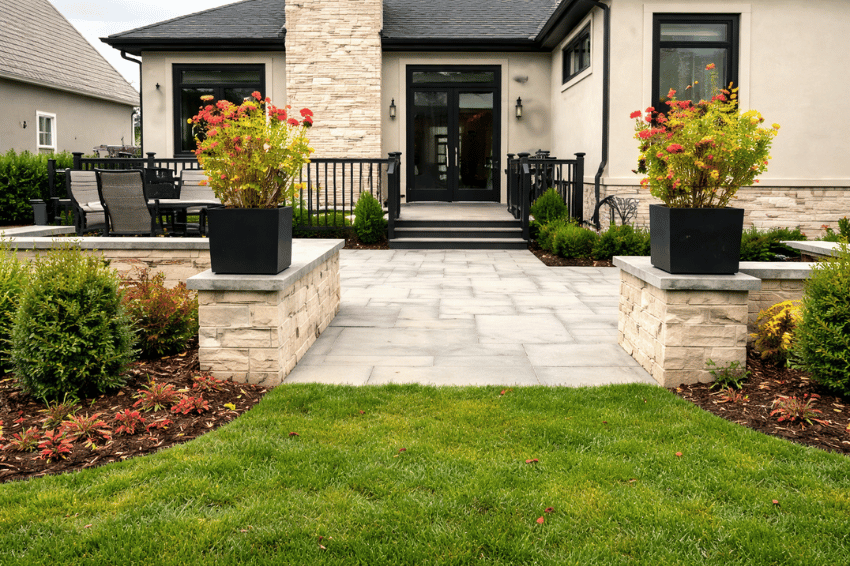
Large format slabs look modern and clean, but they must be installed on a base that is designed for stability. Joint spacing, leveling, and drainage are critical because slab movement is more noticeable than with smaller pavers.
Best for:
- Contemporary patios
- Commercial entries
- Clean-lined outdoor seating areas
Design Notes for Patios, Walkways, Steps, and Retaining Edges
Patios
For patios, the right design improves both comfort and performance.
- Plan a gentle slope away from the home for drainage
- Include clear transitions at doors and thresholds
- Consider border courses to help lock the field pavers in place
- Use edge restraint to prevent spreading over time
Walkways
Walkways in Chicago should be designed for safety and long-term stability.
- Avoid tight turns that encourage cutting corners and erosion
- Use consistent widths for comfortable passing
- Add subtle lighting for winter visibility
- Consider textured surfaces where snow and ice are common
Steps
Steps often fail first if the base or drainage is wrong.
- Build steps with proper rise and run for comfort
- Use materials that can handle de-icing exposure
- Design for water shedding, not pooling
- Tie step construction into the same stable base system as the rest of the hardscape
Retaining Edges and Borders
Retaining edges and borders hold the whole system together.
- Use structural edging or curb restraints
- For retaining walls, include proper backfill and drainage behind the wall
- Design wall height and layout to match soil conditions and load needs
- Avoid shortcuts on the geogrid reinforcement when the wall requires it
Drainage and Base Prep: The Real Key to Longevity
If you remember one thing, make it this: the base and drainage plan determine whether your hardscape lasts.
Base Prep Essentials
A durable hardscape installation typically includes:
- Excavation to the right depth for your application
- Compacted aggregate base in lifts (not dumped all at once)
- Proper grading so water moves away from structures
- A bedding layer that supports leveling without becoming unstable
- Edge restraints installed correctly to lock everything in
Skipping steps or underbuilding the base is one of the most common reasons hardscapes fail in freeze-thaw climates.
Drainage Strategies That Protect Your Investment
Drainage is not an add-on. It is part of the design.
Consider options such as:
- Slope planning and surface drainage
- Permeable pavers, when appropriate
- Channel drains in problem areas
- Downspout extensions and discharge planning
- Catch basins where water naturally collects
Good hardscaping services account for your property’s water patterns first, not last.
Material Choices That Make Sense in Chicagoland
The best material is one that matches your style and your site conditions.
Common durable options include:
- Concrete pavers designed for freeze-thaw performance
- Natural stone with proven local suitability
- Segmental retaining wall systems with engineered specs
- Quality jointing sand or joint stabilization products for heavy-use areas
Your hardscape construction plan should also consider salt exposure, especially on commercial properties and front entries.
Planning Tip: Start Early for the Best Spring Schedule
Outdoor living planning ramps up quickly as spring approaches. If you want your project installed before peak summer, early planning helps you lock in design, materials, and schedule.
A thoughtful design process now leads to fewer surprises later, and better results that last through many Chicago winters.
Build Hardscapes That Look Great and Stay Put
Strong hardscape designs are a mix of aesthetics, engineering, and experience. When drainage, base prep, and pattern selection work together, you get a finished space that holds up year after year.
If you are considering patios, walkways, steps, or retaining edges in Chicagoland, Martin John Company can help you plan and install a hardscape that is built for our climate.
Contact our team to discuss your project and schedule a site visit.