
A hardscape can look perfect on day one and still fail if it was not built correctly underneath. In Chicagoland, freeze-thaw cycles, clay soils, and spring moisture make hardscape construction especially dependent on the parts you cannot see: excavation depth, base layers, compaction, edge restraints, and drainage planning.
If you are investing in patios, walkways, steps, or retaining edges, the goal is not only visual. The goal is durability, stability, and fewer repairs over time.
Below is a clear breakdown of what matters most in Chicago-area hardscape construction, plus the most common failure signs and how to avoid them.
Why Chicago Hardscape Fails Without the Right Base
Most hardscape failures are not caused by “bad pavers.” They are caused by movement below the surface.
Common causes include:
- Base material that is too shallow
- Poor compaction
- Water trapped beneath the hardscape
- Freeze-thaw expansion and contraction
- Weak edges that allow spreading and shifting
A strong build starts with proper excavation and a stable base structure.
Excavation Depth, The First Make-or-Break Step
Excavation depth determines whether the base can do its job. If the base is too thin, it cannot distribute the load or resist movement.
Depth requirements vary by:
- Patio vs walkway vs driveway
- Soil conditions
- Drainage requirements
- Intended load and traffic
In Chicagoland, skipping excavation to “save time” is one of the quickest ways to create settling, heaving, and uneven surfaces later.
Base Layers: What a Durable System Typically Includes
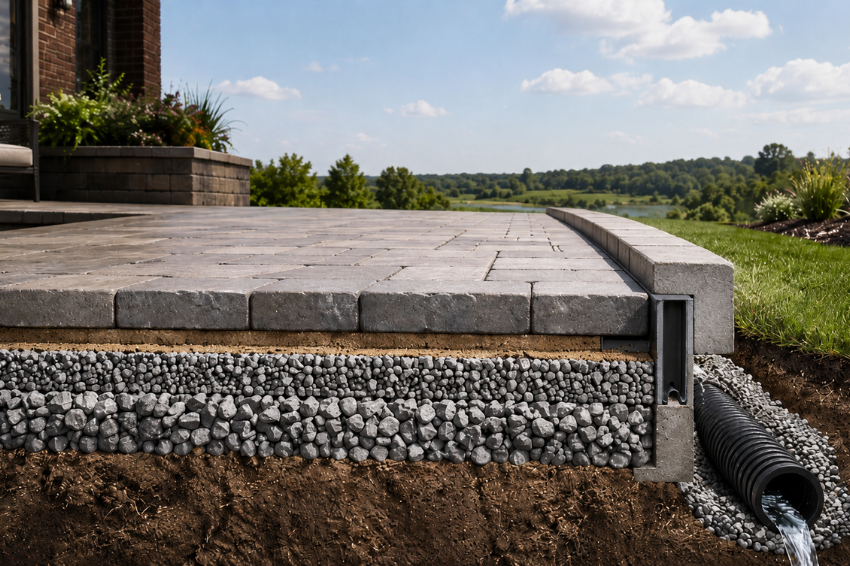
A well-built hardscape generally uses multiple layers, each with a purpose:
- Subgrade preparation (stable soil base)
- Aggregate base layers installed in lifts
- Compaction between layers
- Bedding layer for leveling pavers or slabs
- Jointing material that locks units in place
The exact materials and thickness depend on the project scope, but the principle is the same: stability comes from a layered, compacted system.
Compaction, Where Quality Shows Up Fast
Compaction is not optional. Without proper compaction:
- The base settles unevenly
- Pavers shift and rock
- Low spots form where water pools
- Edges spread over time
The best installation teams compact the base material in lifts and verify stability before moving forward. This is one of the biggest differences between hardscape that lasts and hardscape that constantly needs repair.
Edge Restraints, The Detail That Keeps Everything Locked
Edge restraints keep pavers from spreading and losing alignment. Without strong edges:
- Joints widen
- Borders move
- Pavers start to drift outward
- Surfaces become uneven
Edge restraint should be part of the system, not an afterthought. It is especially important for walkways, patios with curves, and transitions between surfaces.
Drainage Basics, Water Is the Real Enemy
In Chicago, drainage is often the deciding factor in hardscape longevity. Water under or around the hardscape leads to:
- Soft spots in the base
- Freeze expansion in winter
- Washout and settling
- Ponding and ice hazards
A good hardscape construction plan includes:
- Proper slope away from the home
- Control of downspout discharge
- Consideration of low points
- Drainage solutions where needed (channel drains, catch basins, permeable systems)
Drainage is not “extra.” It is part of doing the job correctly.
Common Hardscape Failure Signs, And What They Usually Mean
If you already have a hardscape, these signs often point to base or drainage issues.
1) Pavers rocking or shifting underfoot
Usually indicates:
- Poor base compaction
- Bedding layer instability
- Settlement below the surface
2) Low spots where water collects
Usually indicates:
- Inadequate slope
- Settlement due to a weak base
- Drainage not addressed
3) Spreading edges or widening joints
Usually indicates:
- Missing or weak edge restraint
- Poor border construction
- Long-term movement from water and freeze-thaw
4) Heaving or raised areas after winter
Usually indicates:
- Water trapped in the base
- Freeze-thaw expansion
- Poor drainage or subgrade issues
5) Cracked slabs or uneven step landings
Usually indicates:
- Settlement and voids under load points
- Drainage patterns causing repeated movement
- Base depth is not sufficient for the structure
How to Avoid Problems Before You Build
If you are planning a new hardscape, these steps help protect your investment:
- Ensure excavation depth matches Chicago conditions and project load
- Use proper base material and compact it in lifts
- Plan drainage first, not after installation
- Include strong edge restraints
- Choose materials designed for freeze-thaw performance
- Work with a team that treats build quality as the priority, not speed
A Hardscape Should Feel Solid for Years, Not Just for the First Season
Hardscape construction in Chicago is not only about appearance. It is about building a system that resists water, movement, and freeze-thaw stress.
If you are considering a new patio, walkway, or hardscape upgrade, Martin John Company can help you plan and build a hardscape that is engineered for Chicagoland conditions and built to last.
Contact us to discuss hardscape construction and schedule a site evaluation.