
Evergreens are supposed to be the reliable ones. When the lawn goes dormant, perennials disappear, and deciduous trees lose their leaves, while evergreens keep the landscape looking alive. But in Chicagoland, winter evergreen trees still need protection before deep-freeze weather arrives.
Cold temperatures are only part of the problem. Winter wind, frozen soil, salt splash, sun exposure, heavy snow, and dry conditions can all damage evergreens. The frustrating part is that the damage often shows up months later, usually in late winter or early spring, when needles brown, branches thin, and shrubs show visible signs of stress.
A strong winter prep plan can reduce that damage. Below is what to water, wrap, prune, and monitor before the harshest weather hits, plus when to call a professional for help with vulnerable trees and shrubs.
If your property needs seasonal support, professional landscape maintenance can help protect evergreen trees, planting beds, and high-visibility areas before winter settles in.
Why Evergreens Need Winter Protection in Chicagoland
Evergreen trees and shrubs keep their foliage through winter. That is why they are so useful for privacy, structure, and curb appeal. It is also why they are vulnerable.
Even in winter, evergreens lose moisture through their needles or leaves. When the ground is frozen, roots cannot easily replace that lost moisture. Add wind, sun, salt, and freeze-thaw cycles, and the plant can dry out or become damaged before spring arrives.
Common winter evergreen problems include:
- Winter burn or browning needles
- Salt damage near roads, sidewalks, and driveways
- Broken branches from heavy snow or ice
- Dry root zones before the ground freezes
- Wind damage on exposed sites
- Winter burn on sensitive broadleaf evergreens
- Animal browsing or rubbing
Not every evergreen needs the same level of protection. The right approach depends on the species, age, exposure, soil moisture, and location on the property.
Which Evergreens Are Most at Risk?
Some evergreens handle winter better than others. Established plants in protected locations may need very little help, while newly planted or exposed evergreens may need more attention.
Evergreens that often need extra winter care include:
- Newly planted arborvitae
- Boxwood in windy or sunny winter locations
- Yews near salted sidewalks or driveways
- Junipers in exposed areas
- Broadleaf evergreens with winter sun exposure
- Evergreens planted close to roads or parking areas
- Privacy screens that face strong winter winds
On North Shore properties, mature landscapes often include a mix of evergreen screens, foundation plantings, and formal shrubs. Each area should be evaluated separately, because a protected courtyard planting and a road-facing hedge face different levels of winter exposure.
Water Evergreens Before the Ground Freezes
Watering is one of the most important steps for protecting evergreen trees in winter. Evergreens that enter winter dry are more likely to suffer browning and winter burn.
Fall watering is especially important for:
- Newly planted evergreens
- Evergreens planted in the last two to three years
- Plants in windy locations
- Plants near pavement or reflected heat
- Evergreens under roof overhangs where rainfall may not reach
- Plants that experienced summer drought stress
The goal is to water deeply before the soil freezes, not to keep the soil soggy. Deep watering helps the root zone hold moisture going into winter.
Once the ground freezes, roots take up water less readily. That is why watering in the fall before freeze-up matters.
Mulch the Root Zone, But Do Not Pile Mulch Against the Trunk
Mulch helps regulate soil temperature, reduce moisture loss, and protect roots from harsh winter swings. A fresh mulch layer can be especially helpful around newly planted evergreens or plants with exposed root zones.
Good winter mulching practices include:
- Apply mulch over the root zone
- Keep mulch several inches away from trunks and stems
- Avoid burying low branches or crowns
- Refresh thin or washed-out areas before winter
Piling mulch against trunks can trap moisture and contribute to decay or pest problems.
Use Winter Covers for Outdoor Plants When Exposure Is Severe
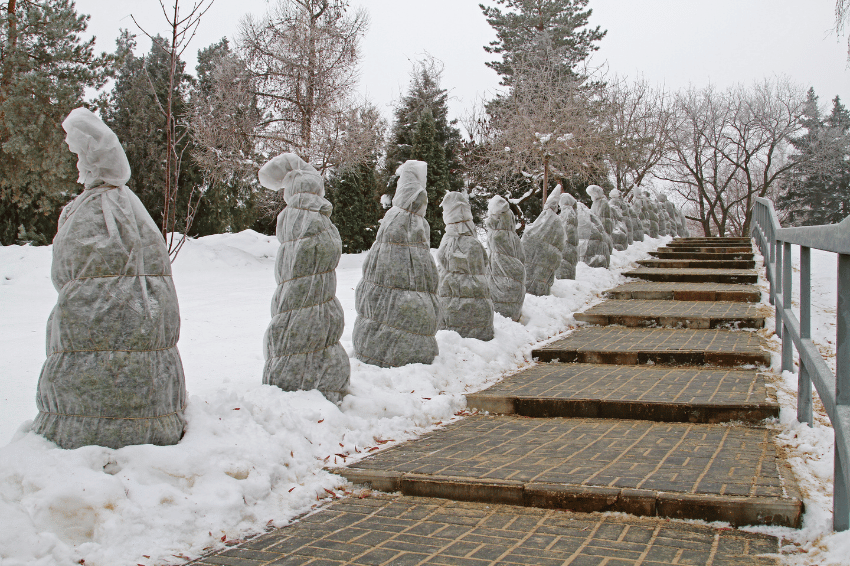
Winter covers for outdoor plants can help protect vulnerable evergreens from wind, salt, and sun exposure. The key is using the right material and the right method.
Breathable protection is usually better than plastic. Burlap screens, windbreaks, and properly installed wraps can reduce exposure while still allowing airflow.
Winter covers may be useful for:
- Boxwoods exposed to winter sun and wind
- Young arborvitae screens
- Evergreens near salted sidewalks or driveways
- New plantings in open areas
- Foundation shrubs exposed to reflected sun
- Plants that have shown winter burn in previous years
Avoid wrapping plants too tightly. Leave enough space for airflow and avoid trapping moisture against foliage.
Protect Against Salt Splash
Salt splash is one of the most common winter problems for evergreen trees and shrubs in Chicago-area landscapes. Salt from roads, sidewalks, driveways, and parking lots can land on foliage or build up in nearby soil.
Salt damage may cause:
- Brown or burned needles
- Thinning foliage on the road-facing side
- Branch dieback
- Poor spring recovery
- Long-term decline in sensitive plants
Salt splash mitigation tips include:
- Install burlap screens between evergreens and salt sources
- Keep snow storage away from sensitive shrubs when possible
- Use salt-tolerant plants in high-exposure areas
- Coordinate snow removal routes to reduce plant damage
- Assess salt buildup and, where drainage allows, flush the affected soil in the spring
- Avoid piling salty snow directly onto planting beds
For commercial sites, HOAs, and properties with long driveways or public-facing walks, evergreen protection should be coordinated with snow removal planning. The snow has to go somewhere, but ideally not directly onto the expensive shrubs.
Prune Carefully Before Winter
Pruning evergreens before winter requires restraint. Heavy pruning at the wrong time can expose interior growth, reduce winter protection, or stress the plant before harsh weather.
Before winter, focus on:
- Removing dead or damaged branches
- Cutting branches that are already broken or hazardous
- Light shaping only when appropriate
- Clearing growth that blocks walkways, lights, or entrances
- Identifying plants that need structural pruning later
Avoid aggressive pruning that opens the plant too much before winter. Some evergreens do not recover well from deep cuts into old wood, especially arborvitae. If a hedge or screen is overgrown, it may need a staged plan rather than one heavy pruning session.
Monitor for Snow and Ice Damage
Heavy snow and ice can bend or break evergreen branches, especially on arborvitae, upright junipers, and multi-stemmed shrubs. Some plants can recover after snow melts, but others may split or become permanently misshapen.
Winter monitoring should include:
- Checking evergreens after heavy snow
- Gently brushing off light snow when safe
- Avoiding hard shaking or hitting frozen branches
- Watching for split stems or bent leaders
- Noting areas where roof snow dumps onto plantings
If branches are frozen or coated with ice, do not force them. Ice-covered branches can snap easily. Let the ice melt naturally when possible.
Watch for Winter Burn
Winter burn usually appears as brown, tan, or reddish foliage, often on the side of the plant exposed to wind, sun, or salt. It may not show fully until late winter or early spring.
Common causes include:
- Dry soil before freeze
- Strong winter wind
- Sunny exposure while roots are frozen
- Salt spray
- Recently planted evergreens with limited root systems
Some winter burn is cosmetic and can improve with spring growth. Severe damage may require pruning, plant health support, or replacement if the plant has declined too far.
Do Not Forget Broadleaf Evergreens
Broadleaf evergreens, such as boxwood, keep leaves rather than needles. They can be especially sensitive to winter sun, wind, and moisture loss.
Boxwoods may benefit from:
- Consistent fall watering
- Mulch over the root zone
- Burlap screens in exposed areas
- Protection from salt splash
- Avoiding late heavy pruning
Because boxwoods are often used in formal beds and foundation plantings, winter damage can be very visible. Protecting them before deep-freeze weather helps preserve the structure of the landscape.
Consider Location Before Planting New Evergreens
Some winter problems can be prevented before the plant ever goes in the ground. If an evergreen repeatedly struggles in the same location, the site may be the issue.
Before planting or replacing evergreens, consider:
- Is the site exposed to winter wind?
- Is there salt splash from roads, walks, or drives?
- Does the area stay wet or drain poorly?
- Is there reflected sun from walls or pavement?
- Will snow be piled near the plant?
- Does the mature size fit the space?
A strong landscaping plan chooses evergreens based on both design goals and site conditions. Privacy screening, foundation planting, and winter structure all work better when the plant is matched to the location.
Winter Evergreen Protection Checklist
Use this checklist before Chicagoland deep freeze weather arrives:
- Water evergreens deeply before the ground freezes
- Refresh mulch over root zones
- Keep mulch away from trunks and stems
- Install burlap screens or winter covers where exposure is severe
- Protect plants near roads, sidewalks, driveways, and parking areas from salt splash
- Remove dead, damaged, or hazardous branches
- Avoid heavy pruning before winter
- Check for snow pile zones near sensitive evergreens
- Monitor branches after heavy snow or ice
- Document plants that showed winter burn in previous years
When to Call a Professional
Call a professional if you are dealing with high-value evergreens, large privacy screens, formal boxwood plantings, repeated winter burn, salt damage, or plants that are already declining before winter.
Professional support can help with:
- Identifying which evergreens need protection
- Installing burlap screens or winter covers correctly
- Evaluating salt exposure and snow storage risks
- Pruning damaged branches safely
- Recommending better plant choices for difficult sites
- Planning spring follow-up care
Martin John Company provides landscaping services that support seasonal care, maintenance, planting, and long-term landscape health for Chicago and North Shore properties.
Protect the Structure of Your Winter Landscape
Winter evergreen trees give Chicagoland landscapes structure, privacy, and color when everything else is dormant. Protecting them before deep-freeze weather helps prevent browning, breakage, salt damage, and expensive replacements in spring.
With proper watering, mulching, selective wrapping, salt splash mitigation, careful pruning, and winter monitoring, evergreens can enter the coldest months stronger and be better positioned for spring growth.
Martin John Company helps homeowners, HOAs, and commercial properties prepare landscapes for winter with thoughtful maintenance and seasonal protection.
Contact Martin John Company to schedule winter evergreen protection or discuss a seasonal maintenance plan for your property.