
Fall is one of the most overlooked planting seasons in Chicagoland, which is a shame because it quietly does some of the best work. While spring gets all the attention with its fresh flowers and garden-center chaos, fall gives plants cooler air, warmer soil, and time to develop roots before next year’s growing season.
Understanding the Chicago planting zone helps you choose plants that can handle local winters, establish properly, and return stronger in spring. For North Shore properties, including Libertyville, Lake Forest, and nearby communities, fall planting can be especially useful for trees, shrubs, perennials, bulbs, and certain structural landscape updates.
If you are planning a fall refresh or a larger landscape design, this guide explains how the Chicago garden zone affects plant selection and what can still go in the ground before winter.
What Is the Chicago Planting Zone?
The Chicago plant zone generally falls within a cold-hardy northern climate range, with some variation depending on proximity to Lake Michigan, wind exposure, urban heat, and local microclimates. North Shore properties may experience slightly different conditions from one yard to the next, especially when comparing open, windy sites to protected gardens near buildings or mature trees.
That is why plant selection should consider more than the number on a tag. A plant may technically be hardy for the Chicago planting zone, but still struggle if it is placed in the wrong exposure, planted too late, or installed in poorly drained soil.
Important site conditions include:
- Sun versus shade
- Wind exposure
- Soil drainage
- Salt exposure near roads, walks, and driveways
- Moisture levels through fall and winter
- Protection from buildings, fences, or mature plantings
A strong landscaping plan looks at both the zone and the actual conditions of the property. The plant tag is a starting point, not the whole personality profile.
Why Fall Planting Works So Well in Chicago
Fall planting works because plants are no longer spending as much energy on top growth. Cooler air reduces heat stress, while the soil often stays warm enough for roots to keep developing for several weeks.
That root development matters. Plants installed in fall can begin settling into the soil before winter, then resume growth more quickly in spring. Instead of trying to grow leaves, flowers, and roots all at once, they get a quieter establishment window.
Fall planting can help:
- Support stronger root growth before spring
- Reduce transplant stress compared to hot summer planting
- Give trees and shrubs a head start before next year’s heat
- Improve spring performance for bulbs and perennials
- Allow homeowners to plan ahead instead of rushing in April
For larger projects, fall can also be a smart planning window because it gives your design and installation team time to evaluate the site before winter and prepare for spring improvements through a structured design-build process.
Best Bets: Trees You Can Plant in Fall
Fall is often a strong season for planting many deciduous trees. The cooler temperatures reduce stress, and root systems can begin establishing before winter dormancy.
Good fall tree options for Chicagoland landscapes may include:
- Serviceberry: A smaller ornamental tree with spring flowers, berries, and fall color.
- Oak: A strong long-term shade tree option when space allows.
- Maple: A classic choice, though site conditions and mature size should be considered carefully.
- Crabapple: A good ornamental option when disease-resistant varieties are selected.
- River birch: Useful for moist areas, though it needs the right placement and space.
When planting trees in fall, timing and watering matter. The tree should be installed early enough to begin root establishment, watered properly until the ground freezes, and protected from damage where needed.
Best Bets: Shrubs for Fall Planting
Shrubs are often excellent candidates for fall planting, especially when they are hardy for the Chicago plant zone and matched to the site’s light and soil conditions.
Reliable shrub options may include:
- Hydrangea: A strong landscape choice, with variety selection affecting bloom timing and size.
- Viburnum: Useful for structure, screening, flowers, and seasonal interest.
- Ninebark: Hardy, durable, and available in several foliage colors.
- Dogwood shrub varieties: Often valued for winter stem color and seasonal structure.
- Spirea: A practical option for lower-maintenance massing and borders.
Fall shrub planting works best when plants are watered consistently and mulched properly. Mulch should protect the root zone without being piled against stems. The classic mulch volcano is not a design feature. It is a tiny horticultural crime scene.
Best Bets: Evergreens to Plant Carefully in Fall
Evergreens can be planted in fall, but they need more caution than many deciduous plants. Because evergreens keep foliage through winter, they can lose moisture during cold, windy weather even when the ground is frozen.
Possible evergreen options include:
- Arborvitae: Useful for screening, but needs proper watering and protection from winter burn.
- Juniper: A tougher option for certain exposed or drier sites.
- Boxwood: Popular for structure, but best in protected locations with good drainage.
- Yew: A durable evergreen option for the right site conditions.
For fall evergreen planting, avoid planting too late. Water deeply before the ground freezes, mulch the root zone, and consider protection for windy or salt-exposed areas.
Best Bets: Perennials for Fall Planting
Many perennials can be planted in fall, especially early enough in the season to establish before hard freezes. Fall planting can also help create fuller beds for spring and summer.
Good perennial options for Chicago plants may include:
- Coneflower: Hardy, colorful, and useful in sunny beds.
- Black-eyed Susan: A durable option for summer color.
- Hosta: Reliable for shade and part-shade beds.
- Daylily: Tough and adaptable in many landscape settings.
- Sedum: Good for sunny, well-drained areas and late-season interest.
- Ornamental grasses: Strong for texture, movement, and winter structure.
Perennials planted in fall may not look dramatic right away. That is fine. The goal is not instant fireworks. The goal is root establishment, so the plants return stronger when the growing season begins again.
Best Bets: Spring Bulbs to Plant in Fall
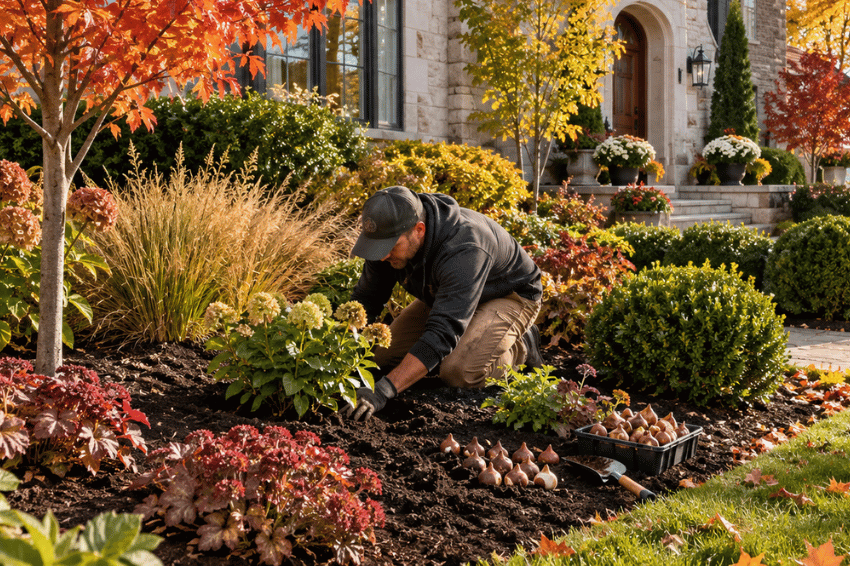
Fall is the season for planting many spring-blooming bulbs. These bulbs need cold exposure to bloom properly, so planting them before winter is part of the plan.
Common spring bulb options include:
- Daffodils
- Tulips
- Crocus
- Allium
- Hyacinth
- Grape hyacinth
Bulbs are a smart way to add early color before shrubs and perennials fully wake up. They work well in front beds, woodland edges, entry areas, and mixed perennial plantings.
What to Avoid Planting Too Late in Fall
Fall planting has advantages, but not everything should go in the ground late in the season. Some plants need a longer establishment window or warmer soil to perform well.
Be careful with:
- Tender perennials that are marginal for the Chicago planting zone
- Broadleaf evergreens in exposed areas
- Plants that require excellent drainage if the site stays wet in winter
- Newly planted material in high-salt areas without protection
- Anything planted so late that roots cannot begin establishing
Late planting is not automatically doomed, but the risk goes up as the ground cools. If timing is questionable, it may be better to wait, adjust the design, or focus on prep work for spring.
How Fall Planting Supports Stronger Root Development
Root development is the main reason fall planting can be so effective. In spring, plants are busy producing leaves, stems, flowers, and roots all at once. In fall, top growth slows down, so more energy can go toward settling into the soil.
That stronger root system can help plants:
- Access moisture more effectively in spring
- Handle early summer heat with less stress
- Recover more quickly after winter dormancy
- Establish faster than plants installed during peak summer heat
For North Shore landscapes, this root-first approach is especially helpful for trees and shrubs that need to handle wind, changing moisture, and freeze-thaw cycles.
Fall Planting Tips for Chicago and the North Shore
To get better results from fall planting, focus on installation quality and aftercare.
- Plant early enough: Give plants time to settle before hard freezes.
- Water consistently: Fall rain does not always provide enough moisture for new plants.
- Mulch correctly: Protect roots, but keep mulch away from trunks and stems.
- Check drainage: Avoid planting in areas that stay soggy through winter.
- Protect vulnerable evergreens: Wind and salt exposure can create winter burn.
- Match plants to exposure: Sun, shade, wind, and soil matter as much as zone.
Professional landscape installation can make a major difference here because proper planting depth, soil preparation, spacing, and watering guidance all affect long-term performance.
How to Use Fall for Bigger Spring Landscape Plans
Even if you are not ready to plant everything now, fall is a useful time to plan. Once summer growth slows and leaves begin to drop, it becomes easier to see the structure of the property.
Fall is a good time to evaluate:
- Where screening is missing
- Which beds need better structure
- Where spring bulbs could add early color
- Which plants struggled through summer
- Where salt exposure or winter wind may be an issue
- How hardscapes, lawns, and planting beds should connect
This is also the right time to make notes for next year’s landscape maintenance plan, especially if certain beds need pruning, replacement, division, mulch adjustments, or soil improvement.
A Simple Fall Planting Checklist
Before planting in fall, run through this quick checklist:
- Confirm the plant is hardy for the Chicago garden zone
- Match the plant to sun, shade, soil, and wind exposure
- Plant early enough for root establishment
- Prepare the soil and check drainage
- Water thoroughly after planting
- Add mulch without piling it against stems or trunks
- Protect evergreens in windy or salt-prone areas
- Continue watering until the ground freezes, when needed
- Document what was planted for spring follow-up
Fall Planting Can Make Spring Easier
Understanding the Chicago planting zone helps you choose plants that fit local conditions and survive the seasons with less drama. Fall planting gives many trees, shrubs, perennials, and bulbs a valuable head start by encouraging root development before spring growth begins.
The best results come from choosing hardy plants, planting at the right time, and matching each selection to the real conditions of the property. When fall planting is done well, spring arrives with stronger roots, cleaner beds, and fewer replacement headaches waiting in the wings.
Martin John Company helps Chicago and North Shore homeowners plan, install, and maintain landscapes built for local conditions and year-round beauty.
Contact Martin John Company to schedule a consultation and plan your fall planting strategy.