
Fall yard cleanup in Chicago is not just about making the property look tidy before winter. It is one of the highest-impact maintenance windows of the year. What you clean, cut back, edge, protect, and remove in fall can shape how your lawn, beds, shrubs, and hardscapes come through winter and wake up in spring.
In Chicagoland and the North Shore, fall brings leaves, temperature swings, early frost, soggy turf, and the first round of salt exposure near walks and drives. Skip cleanup now, and spring can become messy: matted leaves, weak turf, dead perennial tops, salt-burned evergreens, and beds that need twice as much work to look normal again.
If you are planning landscape maintenance services for a home, HOA, or commercial property, use this fall cleanup checklist to get ahead before winter settles in.
Why Fall Yard Cleanup Matters in Chicago
Chicago winters are hard on landscapes. Lawns go dormant, plants face freezing wind, leaves trap moisture, and snow can hide problems until spring. A thoughtful fall cleanup reduces that pressure by removing debris, protecting vulnerable plants, and setting clean edges before the ground freezes.
A strong fall yard cleanup helps:
- Reduce lawn smothering from heavy leaf cover
- Lower disease pressure in turf and planting beds
- Improve spring curb appeal
- Protect shrubs and evergreens from salt and winter burn
- Prevent clogged drains and messy hardscape edges
- Make spring maintenance faster and more efficient
Fall is not the season to panic-clean everything into a bald little landscape skeleton. The goal is selective cleanup: remove what causes problems, protect what needs support, and leave the property ready for winter.
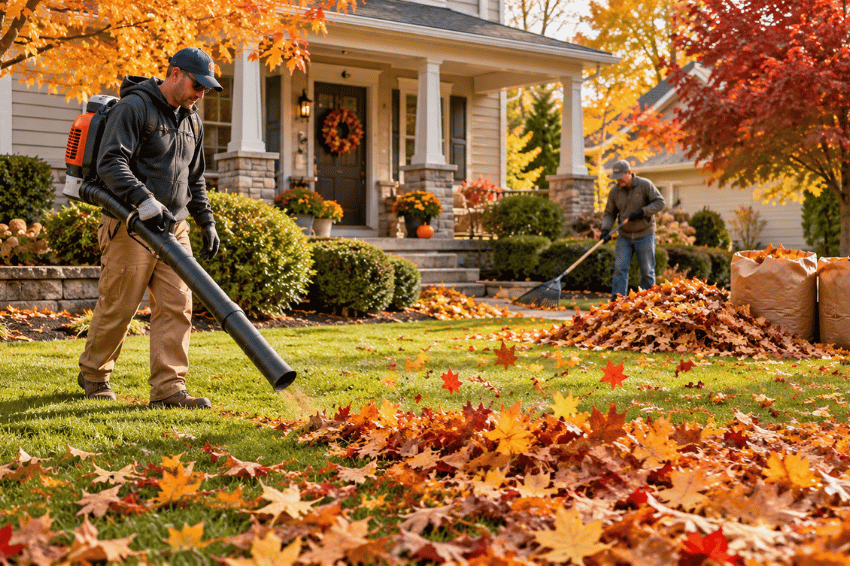
1. Build a Leaf Removal Strategy Before Leaves Pile Up
Leaf cleanup in Chicago is usually not a one-time task. Mature trees can drop leaves in waves, and waiting until every leaf has fallen can leave the lawn buried for too long.
Heavy, wet leaf cover can block sunlight, trap moisture, and smother turf. It can also create slippery walkways and clog drainage areas around patios, drives, and entries.
A good leaf removal strategy includes:
- Clearing high-traffic areas first, including walks, entries, and driveways
- Removing heavy leaf mats from turf before they compress
- Cleaning leaves out of planting beds where they may trap moisture around crowns
- Keeping drainage paths, catch basins, and hardscape edges clear
- Scheduling multiple cleanups for heavily wooded North Shore properties
For some lawns, mulching light leaf cover into the turf can be helpful. But thick leaf layers should be removed, especially when they sit wet and heavy.
2. Schedule the Final Mowing at the Right Height
The final mowing of the season helps the lawn enter winter cleanly. Grass that is left too long can mat down under snow, while grass cut too short may be more exposed to winter stress.
For Chicago-area lawns, the final mow should usually happen when growth has slowed but before the lawn is completely dormant. The exact timing depends on fall weather, rainfall, and turf condition.
Final mowing goals include:
- Leaving turf at a healthy height going into winter
- Preventing long blades from matting under snow
- Cleaning up leaf debris before it settles into the lawn
- Creating a neat finish around walks, drives, and beds
If your lawn has been stressed by summer heat, drought, shade, or traffic, fall is also the time to evaluate whether turf repair should be part of the maintenance plan.
3. Edge Beds and Clean Up Borders
Clean bed edges make a property look intentional even after plants go dormant. They also make spring work easier because the bed lines are already defined.
Fall edging should focus on:
- Re-establishing clean bed shapes
- Removing grass that has crept into beds
- Cleaning borders near patios, walkways, and drives
- Reducing places where leaves and debris collect
This is especially useful for front yards, commercial entries, and HOA common areas where curb appeal still matters after peak bloom season is over.
4. Clean Out Planting Beds Without Overdoing It
Fall bed cleanup is a balancing act. Some debris should be removed because it can harbor disease or smother plants. Other material can provide winter protection or habitat when it is not creating a maintenance issue.
In formal residential or commercial landscapes, cleaner beds are usually preferred. In more natural garden areas, a selective approach may be better.
Focus on removing:
- Diseased plant material
- Heavy leaf piles around crowns of perennials
- Broken stems and storm debris
- Weeds before they go to seed
- Annuals that have finished for the season
For properties using professional landscaping services, fall cleanup can also include bed inspections, mulch adjustments, and planning for spring plant replacements or upgrades.
5. Time Pruning Carefully
Fall is not the time to prune everything just because the tools are out and everyone feels emotionally ready to attack a shrub. Pruning timing depends on plant type, bloom cycle, and winter sensitivity.
In general:
- Remove dead, damaged, or hazardous branches as needed
- Avoid heavy pruning that encourages tender new growth before winter
- Be careful with spring-flowering shrubs, which may already have buds for next year
- Save certain structural pruning tasks for dormancy, when appropriate
The goal is to clean up obvious problems without stressing plants right before winter. If you are unsure, it is better to ask before making cuts that remove next spring’s flowers or expose the plant to cold damage.
6. Cut Back Perennials Based on Plant Health and Design Goals
Perennial cutbacks are one of the most common fall cleanup tasks, but not every perennial needs the same treatment.
Cut back perennials when:
- The foliage is diseased or collapsed
- The plant looks messy in a formal bed
- Dead material may trap too much moisture
- The area needs a clean, maintained appearance through winter
Consider leaving some seed heads or ornamental structure when:
- The plant provides winter interest
- The bed has a naturalized design
- The material does not create disease or maintenance issues
- The property owner wants more texture through winter
Ornamental grasses, for example, can add strong winter texture when left standing, but they should be cut back before spring growth begins.
7. Top Up Mulch Where Needed
Mulch helps regulate soil temperature, retain moisture, and protect roots. By fall, some mulch may be thin, faded, washed out, or displaced by maintenance and storms.
A fall mulch top-up should be light and strategic. The goal is not to bury every bed under a mulch volcano. Tiny tree turtlenecks are not good horticulture.
Mulch tips for fall:
- Refresh thin areas before winter
- Keep mulch away from trunks and shrub stems
- Use mulch to protect exposed root zones
- Repair washout near slopes, downspouts, and hardscape edges
- Avoid piling mulch too deeply around perennial crowns
Mulch can be especially helpful for newly planted shrubs and perennials that need root protection during their first winter.
8. Protect Evergreens From Salt and Winter Burn
Evergreens can take a beating in Chicago winters. Wind, frozen soil, sun exposure, and salt splash can all cause browning, needle burn, and stress that shows up in late winter or early spring.
Fall is the right time to prepare vulnerable evergreens, especially near sidewalks, driveways, roads, and parking areas.
Protection steps may include:
- Watering evergreens deeply before the ground freezes
- Adding mulch over the root zone
- Installing burlap screens where wind or salt exposure is severe
- Keeping snow storage areas away from sensitive shrubs when possible
- Planning salt-tolerant plant replacements for chronic problem areas
For properties that also need winter site support, fall is a smart time to coordinate landscape cleanup with snow removal planning, especially around commercial entrances, sidewalks, and parking areas.
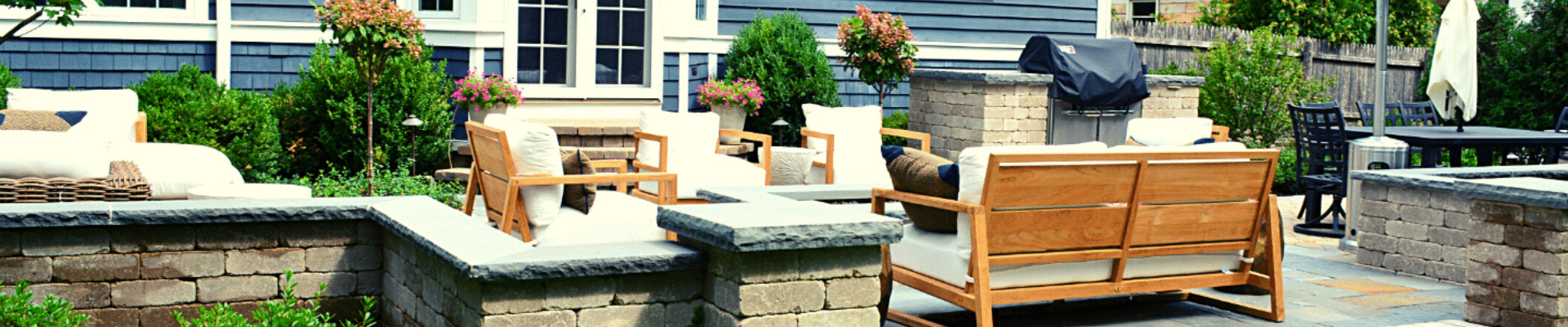
9. Clear Hardscape Edges and Drainage Areas
Leaves, mulch, and debris can collect around patios, walkways, steps, and drainage points. Once snow and ice arrive, those areas become harder to monitor.
Before winter, clear:
- Patio and walkway edges
- Step corners and transitions
- Catch basins and drain covers
- Downspout discharge areas
- Low spots where leaves collect and trap water
This helps reduce ice hazards and protects hardscape surfaces from moisture problems.
10. Make Notes for Spring While Problems Are Still Visible
Fall cleanup is also a good time to document what needs attention next year. Some issues are easier to see before snow covers everything.
During cleanup, make note of:
- Thin turf areas
- Drainage trouble spots
- Overgrown shrubs that need renovation pruning
- Dead or struggling plants
- Mulch washout patterns
- Hardscape settling or uneven edges
Those notes can become a spring maintenance plan instead of a spring surprise party from hell.
Fall Cleanup Checklist for Chicago Homes
Use this short fall cleanup checklist for residential properties:
- Remove heavy leaves from lawns, beds, walkways, and drains
- Complete the final mowing once turf growth slows
- Edge beds and clean up borders
- Remove diseased plant material and finished annuals
- Cut back perennials where needed
- Prune only what is appropriate for the season
- Refresh thin mulch areas without piling against stems
- Water evergreens before the ground freezes
- Protect salt-exposed evergreens and shrubs
- Clear hardscape edges and drainage points
- Document issues for spring repairs or upgrades
Short Version for Commercial and HOA Properties
Commercial and HOA properties need fall cleanup with extra attention to visibility, access, liability, and consistent appearance standards.
Prioritize:
- Leaf cleanup around entries, walkways, parking lots, and signage
- Final mowing and turf inspection in common areas
- Bed cleanup near high-visibility zones
- Pruning for sightlines, lighting, cameras, and pedestrian access
- Drainage clearing near curbs, catch basins, and walkways
- Evergreen protection near salted sidewalks and drives
- Coordination with winter snow and ice management plans
For property managers, HOAs, shopping centers, and business sites, a fall cleanup plan should connect directly to commercial landscape maintenance and winter operations.
A Clean Fall Makes for an Easier Spring
Fall yard cleanup in Chicago is one of the best ways to protect your property before winter and reduce the amount of recovery work needed in spring. Leaf removal, final mowing, edging, bed cleanup, pruning decisions, perennial cutbacks, mulch touch-ups, evergreen protection, and drainage clearing all work together.
When the fall cleanup is done well, spring starts cleaner, healthier, and with fewer expensive fixes waiting under the snow.
Martin John Company helps Chicago and North Shore homeowners, HOAs, and commercial properties prepare their landscapes for each season with thoughtful, reliable maintenance.
Contact Martin John Company to schedule fall yard cleanup or discuss a seasonal maintenance plan for your property.